The Field Guide
The Most Haunted Places in America
Every haunted-America list eventually converges on the same handful of places, and there is a reason: these are the sites where documented tragedy, unusual architecture and a century of retelling all overlap. Below is a curated tour of the most consistently reported haunted locations in the country, with the verified history underneath each legend.
The short answer
The most frequently cited haunted places in America include the Gettysburg battlefield in Pennsylvania, the Winchester Mystery House in California, the Myrtles Plantation in Louisiana, the Stanley Hotel in Colorado, Eastern State Penitentiary in Philadelphia, and the Waverly Hills Sanatorium in Kentucky. Each is tied to a documented history of mass death, illness or tragedy, which is the common thread behind almost every enduring American ghost story.
Key points
- Most famous haunted sites share a real history of mass casualties: battle, disease, imprisonment or industrial accident.
- Gettysburg alone accounts for a huge share of American ghost lore due to the scale of the 1863 battle.
- The Winchester Mystery House's reputation comes from its bizarre architecture, not documented sightings.
- Many haunted hotels and sanatoriums now run legitimate historical tours alongside their ghost-tour business.
- Reported phenomena cluster around a few consistent types: apparitions, disembodied sounds, cold spots and unexplained equipment failure.
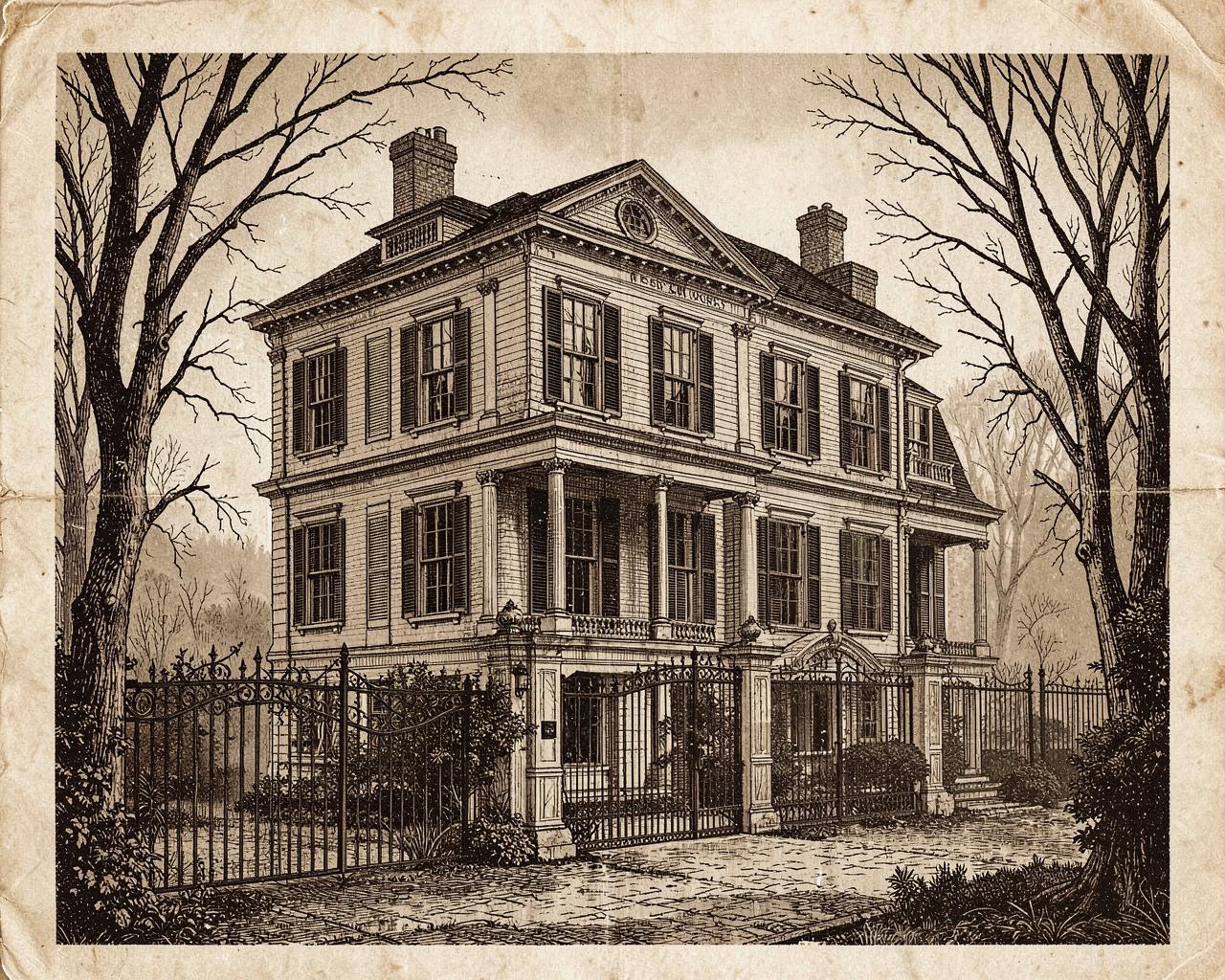
Battlefields: Where the Dead Are Said to Remain
Civil War battlefields produce more reported haunting activity than almost any other category of American site, largely because of the sheer scale and speed of the casualties.
Gettysburg, Pennsylvania
The bloodiest battle of the Civil War left roughly 51,000 casualties over three days in July 1863, and the town has never stopped being defined by it.
At a glance
- Location: Gettysburg National Military Park
- Historic event: Battle of Gettysburg, July 1–3, 1863
- Most-cited sites: Devil's Den, Little Round Top, the Wheatfield
Devil's Den, a jumble of large boulders where sharpshooters fought at close range, is the most frequently photographed 'haunted' spot on the field.
Visitors and staff have long reported disembodied gunfire, drumming and voices, particularly around dawn and dusk.
The Wheatfield changed hands roughly six times in a single day of fighting, and is one of the most consistently reported sites for apparitions of soldiers.
Several Gettysburg buildings pressed into service as field hospitals, including the Jennie Wade House, report cold spots and unexplained sounds tied to that history.
Ghost tours have operated in Gettysburg since the 1990s, but the town's reputation for hauntings dates back to survivor accounts published within a decade of the battle.
Mansions and Plantations
Grand private homes built on 19th-century fortunes make up a second major category, usually tied to a single dramatic death or a builder's own obsession.
The Winchester Mystery House, San Jose, California
Sarah Winchester, heir to the Winchester rifle fortune, spent decades expanding her house into a 24,000-square-foot maze — and the story around why has become legend.
At a glance
- Built: continuously from 1886 to 1922
- Owner: Sarah Winchester, widow of William Wirt Winchester
- Notable features: staircases to nowhere, doors opening onto walls, a room numbered 13
Popular legend holds that a medium told Sarah Winchester she was cursed by the spirits of everyone killed by Winchester rifles, and that she must keep building to appease them.
The house grew to 160 rooms with staircases that lead to ceilings and doors that open onto blank walls, feeding the idea it was designed to confuse spirits.
Historians note there is no contemporary documentation of the curse story; it appears to have been popularized after Winchester's death in 1922.
The genuinely strange architecture is more plausibly explained by decades of ongoing, unplanned construction rather than any single haunting.
The house still operates daily tours and remains one of the most visited 'haunted' attractions in the country regardless of the legend's shaky origins.
The Myrtles Plantation, St. Francisville, Louisiana
Often marketed as 'one of America's most haunted homes,' with a reputation built on a slave-era history and a widely repeated but historically disputed poisoning story.
At a glance
- Built: 1796, expanded through the 19th century
- Notable legend: the enslaved housekeeper Chloe, said to have poisoned the family
- Now operates as: a bed and breakfast offering ghost tours
The most repeated legend describes an enslaved woman named Chloe poisoning a birthday cake, killing members of the Woodruff family, though no historical record confirms this specific story.
The plantation's real history includes multiple documented deaths, including at least one murder on the property in 1871.
A famous photograph reportedly showing a shadowy figure between two buildings has circulated since the 1990s and remains widely shared, though unverified.
The site is one of the few haunted houses in America to combine a slavery-era history with active ghost tourism, which has drawn criticism for glossing over the underlying history.
Guests report cold spots, disturbed bedding, and mirrors that are said to trap spirits, following a Southern custom of covering mirrors after a death.
Hotels, Prisons and Hospitals
Large institutional buildings with a documented history of suffering — asylums, prisons, sanatoriums and grand old hotels — round out most 'most haunted' lists.
The Stanley Hotel, Estes Park, Colorado
Built in 1909, the Stanley became internationally famous after inspiring Stephen King to write The Shining following a 1974 stay.
At a glance
- Built: 1909 by F.O. Stanley
- Claim to fame: inspired Stephen King's The Shining
- Most-cited room: Room 217, where King and his wife stayed
F.O. Stanley and his wife Flora are both said to still be present, with piano music and footsteps attributed to Flora reported in the concert hall.
Room 217 gained its reputation partly from a 1911 gas explosion that injured the hotel's head housekeeper, who reportedly continued to work there for another three decades.
Stephen King's overnight stay in Room 217 in 1974, during a nearly empty off-season, directly inspired his novel, though the 1980 film was shot elsewhere.
The hotel now runs dedicated nighttime ghost tours and has become a genuine pop-culture pilgrimage site independent of any specific sighting.
Staff report the fourth floor as the most consistently reported location for unexplained children's laughter and footsteps.
Eastern State Penitentiary, Philadelphia, Pennsylvania
A pioneering and famously harsh 19th-century prison built on a solitary confinement model that drove many inmates to breakdown.
At a glance
- Built: 1829, closed as a prison in 1971
- Design: radial wagon-wheel layout with solitary cells
- Notable inmate: Al Capone, held there in 1929–1930
Eastern State pioneered the 'separate system,' isolating inmates in individual cells for the entirety of their sentence, a practice widely blamed for severe psychological harm.
Al Capone served eight months there in 1929 and reportedly described being haunted in his cell by the ghost of a man he had ordered killed.
Cellblock 12 and the abandoned death row wing are the most frequently cited locations for cold spots and disembodied voices on guided tours.
The prison now operates as a museum and runs a large annual haunted-house event, 'Terror Behind the Walls,' each October.
Paranormal investigation teams have documented the site extensively since the 1990s, making it one of the most studied haunted locations in the country.
Waverly Hills Sanatorium, Louisville, Kentucky
A tuberculosis hospital that treated patients through the height of the early 20th-century TB epidemic, with a documented death toll in the thousands.
At a glance
- Built: 1910, expanded 1926
- Original purpose: tuberculosis treatment facility
- Notable feature: the 'body chute,' a tunnel used to move remains discreetly
At its peak in the pre-antibiotic era, Waverly Hills treated hundreds of tuberculosis patients at a time, with death tolls historians estimate in the thousands over its operating decades.
The body chute tunnel was built to move deceased patients out of view of the living wards, reportedly to preserve morale — it remains the most frequently mentioned feature on tours.
The fifth floor, associated with a specific and often-repeated but unverified nurse suicide story, is the most consistently reported location for apparitions.
The facility briefly operated as a geriatric center in the 1960s and 70s before closing, adding a second layer of institutional history to the site.
It is now privately owned and hosts extensive nighttime paranormal tours rather than any daytime historical program.
Frequently Asked Questions
- What is the most haunted place in America?
- There is no single agreed-upon answer, but Gettysburg is cited more often than any other American location, largely due to the scale of the 1863 battle and the density of reported activity across the battlefield. The Winchester Mystery House, the Myrtles Plantation, the Stanley Hotel, Eastern State Penitentiary and Waverly Hills Sanatorium round out nearly every major 'most haunted' list.
- Why are so many haunted places former hospitals or prisons?
- Institutions like sanatoriums, asylums and prisons concentrated large numbers of people who suffered and often died on-site, frequently under harsh or isolating conditions. That documented history of suffering gives these buildings a plausible narrative foundation that purely fictional haunted-house stories lack, which is a large part of why they endure as legends.
- Is the Winchester Mystery House curse story true?
- There is no contemporary documentation from Sarah Winchester's lifetime confirming the story that a medium told her to keep building the house to appease spirits killed by Winchester rifles. The tale appears to have taken shape after her death in 1922. The house's strange architecture is more plausibly the result of decades of ongoing, unplanned construction.
- Can you actually visit these haunted places?
- Yes — nearly all of the sites on most lists, including Gettysburg, the Winchester Mystery House, the Stanley Hotel, Eastern State Penitentiary, Waverly Hills Sanatorium and the Myrtles Plantation, operate regular public tours, and several offer dedicated nighttime ghost tours in addition to standard historical programming.
- What kind of phenomena do people report at haunted sites?
- Reports cluster around a small set of recurring types: apparitions or shadowy figures, disembodied voices or footsteps, unexplained cold spots, equipment malfunction such as flashlights or cameras failing, and objects moving or being found disturbed. These categories repeat across nearly every well-known haunted location in the country.
- Why is Gettysburg considered so haunted?
- The Battle of Gettysburg produced roughly 51,000 casualties over three days in July 1863, one of the highest tolls of the Civil War, concentrated in a small area that is now a preserved battlefield. That combination of scale, speed and a preserved physical setting is why reported activity is so densely concentrated there compared to almost anywhere else in the country.