The Collector's Desk
Vintage Halloween Postcards: A Collector's Guide
The golden age of the Halloween postcard ran roughly from 1905 to the early 1920s, and it produced the imagery most people still picture when they hear the word 'vintage Halloween': jack-o'-lanterns with gap-toothed grins, witches silhouetted against a harvest moon, and black cats arched against a fence. Here is how that era came together, who made the best of it, and how to date and value a card today.
The short answer
The golden age of Halloween postcards ran from about 1905 to 1920, driven by cheap color lithography, the rural free delivery of mail, and a fashionable postcard-collecting craze. The most sought-after cards were printed in Germany for American publishers, especially those associated with artist Ellen Hattie Clapsaddle and the John O. Winsch and Raphael Tuck & Sons publishing houses. Value today depends heavily on artist, publisher, printing origin, condition and whether the card was ever mailed.
Key points
- The postcard 'golden age' ran roughly 1905 to 1920, ending abruptly when World War I cut off German printing.
- Ellen Hattie Clapsaddle and John O. Winsch produced the most collected and highest-value Halloween designs.
- Cards printed in Germany before 1914 generally show sharper color and detail than later American-printed cards.
- A postmark, printed publisher's mark and back-design style are the fastest ways to date an unmarked card.
- Unused cards in excellent condition consistently bring more than used, postally worn examples, but a clear early postmark can also add value.
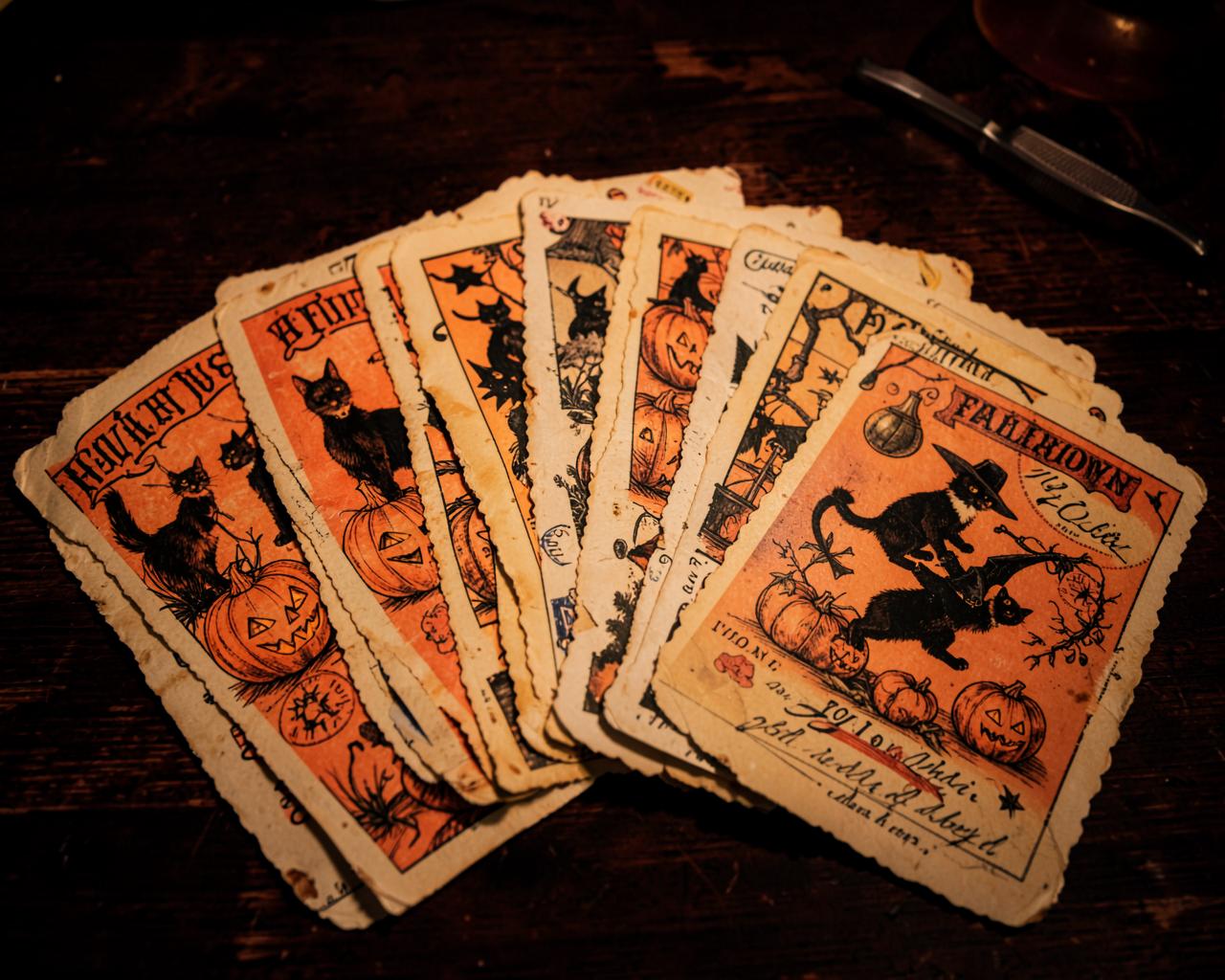
The Golden Age of the Halloween Postcard
Halloween postcards did not exist in any real volume before the early 1900s. Their sudden rise and equally sudden decline were both driven by forces outside the holiday itself.
How the Craze Started
Cheap color printing, cheaper postage, and a national postcard-collecting fad converged right around 1905.
At a glance
- Rural Free Delivery, expanded nationally by 1902
- One-cent postcard postage rate
- German chromolithography printing houses
Rural Free Delivery brought regular mail service to millions of American households for the first time in the early 1900s, creating a huge new audience for mailed postcards.
A one-cent postage rate for postcards, far cheaper than a letter, made sending them an easy, casual habit rather than a special occasion.
German printing houses had developed advanced, inexpensive color lithography, and American publishers shipped their artwork overseas to be printed and returned.
Postcard collecting itself became a genuine social fad around 1905 to 1910, with families keeping dedicated postcard albums much like a photo album.
Halloween, along with other holidays, became a natural postcard category because the holiday itself had no dominant visual tradition yet — publishers were free to invent the imagery.
Why the Golden Age Ended
World War I cut off the German printing supply chain almost overnight, and the postcard fad itself was already fading by the war's end.
At a glance
- Outbreak of World War I in 1914
- Rising American domestic printing
- Shifting postcard tastes toward photographic and greeting-card formats
German printing for American publishers largely stopped once the war began in 1914, cutting off the source of the finest lithography.
American printers took over production but generally could not match the color depth and fine detail of the pre-war German work.
By the early 1920s the broader postcard-collecting fad had faded, and greeting cards began to take over the market postcards had dominated.
Halloween postcard production continued in smaller volumes through the 1920s and 30s but rarely matched the artistic ambition of the 1905–1914 period.
This is why collectors specifically prize pre-1915, German-printed cards as the peak of the format.
Key Publishers and Artists
A handful of names appear again and again on the most desirable cards, and knowing them is the fastest way to judge a card's quality and value at a glance.
Ellen Hattie Clapsaddle
The most prolific and most collected postcard artist of the era, known for warm, rounded children's figures worked into Halloween scenes.
At a glance
- Signature style: soft-featured children in harvest and costume scenes
- Primary publisher: International Art Publishing Company
- Active period: roughly 1900s through her death in 1934
Clapsaddle trained as a painter before turning to postcard illustration, and her figures have a distinctly softer, more painterly quality than most competitors.
Her Halloween designs favored children in costume alongside jack-o'-lanterns, black cats and harvest imagery rather than frightening or occult themes.
She was reportedly one of the best-paid postcard artists of her time, though she died in poverty after losing her savings in a bank failure.
Unsigned cards are sometimes attributed to her studio based on stylistic similarity, though signed originals command a clear premium.
Her cards are widely reproduced today, so collectors should watch for modern reprints sold as if vintage.
John O. Winsch
Winsch published some of the most atmospheric and now valuable Halloween designs, often darker and more folkloric than Clapsaddle's work.
At a glance
- Signature style: witches, devils and harvest-moon scenes with heavier shadow work
- Notable illustrator: Samuel L. Schmucker
- Active period: roughly 1910 to 1915
Winsch commissioned Samuel L. Schmucker, whose glamorous, almost Art Nouveau female figures set alongside witches and jack-o'-lanterns are among the most sought-after Halloween postcard designs today.
Winsch cards often used embossing and heavier ink saturation, giving them a richer, more dimensional look than flatter competing lines.
Because Winsch's operating window was short, roughly 1910 to 1915, his cards are scarcer than Clapsaddle's much larger output.
Schmucker-illustrated Winsch cards in strong condition are consistently among the highest-priced Halloween postcards at auction.
Winsch cards are usually marked on the back, though the mark is sometimes small and easy to miss under a magnifying glass.
Raphael Tuck & Sons
A major British publisher whose 'Halloween Series' brought a more illustrative, storybook quality to American postcard racks.
At a glance
- Founded: London, 1866, with a large American postcard operation
- Royal warrant holder for Queen Victoria
- Known for numbered postcard series with consistent themes
Raphael Tuck & Sons was already an established fine-art print publisher in Britain before expanding heavily into postcards in the early 1900s.
The firm held a royal warrant as art publishers to Queen Victoria, which it used prominently in its own marketing.
Its Halloween postcards were issued in numbered series, which collectors now use to identify and complete full sets.
Tuck cards tend to show a more storybook-illustration style compared to Clapsaddle's softness or Winsch's shadowy drama.
On 29 December 1940, during the London Blitz, bombing destroyed Raphael House, the firm's London headquarters, along with much of its archive and original artwork — one reason documentation of early series is patchy today.
Dating, Grading and Collecting
Most unmarked postcards can still be dated within a few years using the back design, the printing quality, and small details in the imagery itself.
How to Date an Unmarked Card
The back of the card, not the front, usually gives the clearest dating clues.
At a glance
- A loupe or magnifying glass
- A reference guide to postcard back styles
Check the divided-back rule: cards allowing a message on the same side as the address only became standard in the US after 1907; earlier cards have an undivided back for the address alone.
Look for a printed publisher's mark or series number, usually small, along the bottom edge of the back.
Sharp, richly saturated color with fine detail generally indicates pre-1914 German printing; flatter, coarser color suggests later American printing.
A postmark, if the card was mailed, gives a hard date, though remember the card could have been printed earlier and mailed later.
Costume and object details help too — a printed rather than photographic image, and gently rounded rather than sharply commercial jack-o'-lantern faces, both suggest an earlier date.
Condition and Grading
Postcard grading is less formal than coin or stamp grading, but the same core factors drive value.
At a glance
- Standard postcard condition terms: mint, near mint, excellent, good, fair, poor
- Acid-free postcard sleeves for storage
Check corners first — soft or bent corners are the most common condition issue and the biggest single factor in grading.
Look for creasing across the image, which drops a card's grade sharply even if the color is otherwise strong.
A clean, legible postmark and message can add charm and even historical value, while a heavily worn or stained card loses value regardless of its rarity.
Embossed cards, common in the Winsch line, should be checked for flattened or cracked embossing, which is easy to miss under normal light.
Store cards flat in acid-free sleeves out of direct light — cheap plastic sleeves and stacking loose in a box are the two fastest ways to damage a collection.
What Drives Value
Artist and publisher matter more than age alone; a common 1920s card can be worth less than a scarce 1908 one from a minor publisher.
At a glance
- Auction and dealer price guides
- Postcard collector clubs and shows
Signed Clapsaddle or Schmucker-for-Winsch designs consistently bring the highest prices among Halloween postcards.
Full, complete numbered series from a known publisher are worth more collected together than the same cards sold individually.
Unused cards in excellent condition generally outsell used ones, though an early, clearly dated postmark with a warm handwritten message can appeal to a different type of collector.
Scarcer imagery — witches, devils and occult themes rather than children and jack-o'-lanterns — tends to command a premium because publishers produced far fewer of them.
Buy from reputable postcard dealers or specialist shows rather than unverified online lots, since reproductions of the most famous designs are common.
Frequently Asked Questions
- When were vintage Halloween postcards most popular?
- The golden age ran roughly from 1905 to 1920, peaking before World War I cut off the German printing houses that produced the finest lithography. Postcard collecting itself was a broad social fad during this window, which is why so many Halloween cards from this period survive in family albums today.
- Who is the most collectible vintage Halloween postcard artist?
- Ellen Hattie Clapsaddle is the most prolific and widely collected artist associated with Halloween postcards, known for warm, softly rendered children in costume and harvest scenes. Samuel L. Schmucker, who illustrated for publisher John O. Winsch, produced smaller numbers of more dramatic, atmospheric designs that now command some of the highest prices at auction.
- How can I tell how old my Halloween postcard is?
- Check the back first: an undivided back, meant for the address only, generally indicates a card printed before 1907 in the US. A printed publisher's mark or series number can be matched to known catalogs. Sharp, richly saturated color usually indicates pre-1914 German printing, while flatter color suggests later American printing after the war disrupted the German supply chain.
- What makes a vintage postcard valuable?
- Artist and publisher matter most — signed Clapsaddle cards and Schmucker designs for John O. Winsch bring the highest prices. Condition, completeness of a numbered series, and scarcer imagery like witches and devils rather than common children's scenes also drive value. Whether the card was ever mailed matters less than its overall condition.
- Were Raphael Tuck postcards American or British?
- Raphael Tuck & Sons was a British publisher founded in London in 1866, holding a royal warrant as art publishers to Queen Victoria, but it ran a major American postcard operation and its Halloween series were widely sold and mailed in the United States during the golden age.
- Are vintage Halloween postcards being reproduced today?
- Yes. The most famous Clapsaddle and Schmucker designs in particular are widely reprinted on modern cardstock, greeting cards and even wrapping paper. Collectors should buy from reputable postcard dealers and check paper stock, back design and printing quality closely, since a period-accurate back is one of the hardest details for reproductions to fake convincingly.