The Beast of Black Pine
1 min read · Original fiction — a story, not a true account
Black Pine Forest is older than the town that sits at its edge, older than the roads, older than the oldest grave in the churchyard. The trees grow so close together that midday looks like dusk, and the ground is soft with centuries of fallen needles. It is the kind of forest that swallows sound.
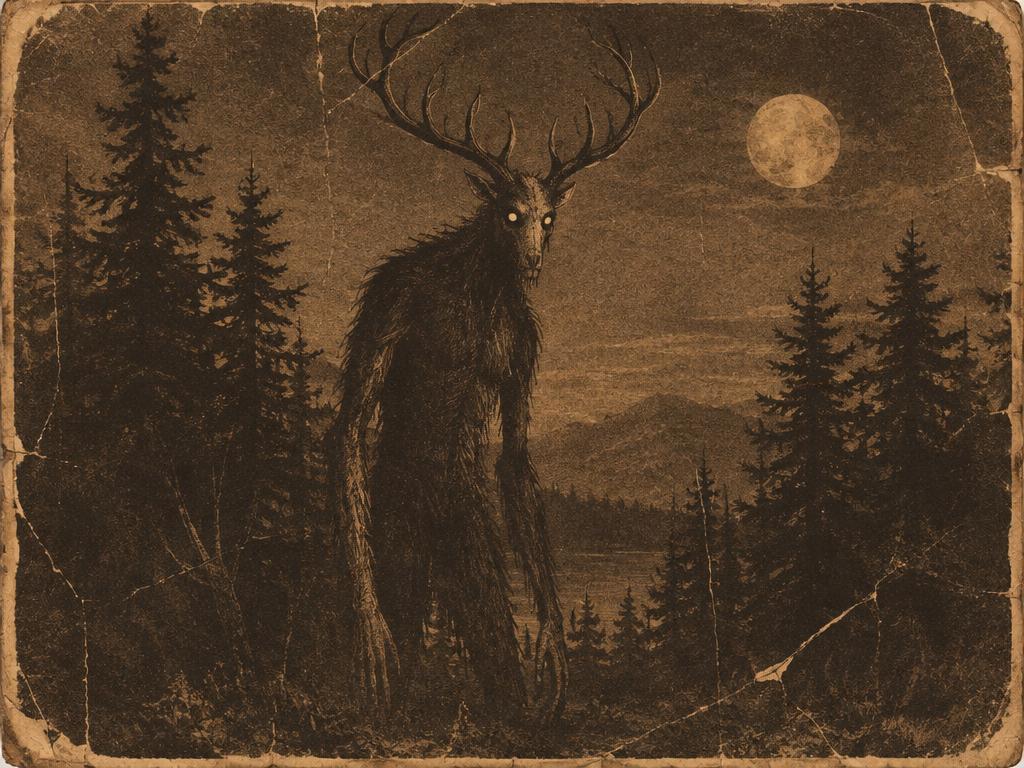
Hunters who venture deep enough speak of the Beast in low voices, usually after several drinks. It stands seven feet tall, they say, with the shape of a man and the eyes of an owl. Its fur is the color of wet bark, and it moves without snapping a single twig. Dogs refuse to track it. Horses refuse to enter the pine grove where it is said to live.
The first written account comes from a surveyor's journal in 1843. He described seeing "a great dark figure" on a ridge at sunset, standing perfectly still, watching his camp. He fired his rifle. The figure did not flinch. When he looked again, it was gone, and the ridge was empty for half a mile in every direction.
In the 1970s, a biology student named Clara Menken set up motion-activated cameras throughout the forest. She captured deer, foxes, owls, and one image that the department still keeps locked in a drawer: a tall, angular shape standing behind a tree, its face turned toward the lens, two pale points where eyes should be. The camera had been mounted twelve feet above the ground.
No one has ever been harmed by the Beast, at least not in any story that can be verified. It does not steal livestock or break fences. It simply watches from the deep pines, especially in autumn, when the veil between the forest and everything else seems thinnest. Some say it is the forest's memory. Others say it is the forest's warning. Either way, the hunters who see it always sell their rifles and find other work.
"It does not hunt. It watches, and it waits for the forest to decide."