The Knockers of Briar Hollow
11 min read · Original fiction — a story, not a true account
My grandfather went into Briar Hollow No. 4 in 1919, at fourteen, as a trapper boy — which meant he sat in the dark by a wooden door for ten hours and opened it for the mules and shut it after them, because if the doors stood open the air went where it liked and the gas gathered where nobody wanted it.
He came out for the last time in 1958, at fifty-three, with a lung that whistled and a pension the size of a hat, and he lived another twenty-two years in a house with a porch that faced the tipple, and in all that time he told me exactly one thing about the mine that I could not get anywhere else.
He said: You do not have to believe in them. You have to stop and listen when they knock, and there is nothing in that a sensible man cannot do.
The knockers came over from Cornwall with the Cornish, who came over because the tin was failing at home and America was full of holes that needed men who knew how to be in them. They arrived in the lead country in the thirties and forties of the last century, in the copper country by the fifties, and in the coal of the middle Appalachians a generation after that, and they brought their tools, their pasties, their chapel singing, and their small unseen neighbors.
In Cornwall they were called knockers, or knackers, and there were as many opinions on what they were as there were parishes. Some said the spirits of dead miners. Some said the souls of men who could not go to heaven for one reason or another and had settled for going underground. Some said an older people entirely, who had been in the rock before anyone came looking for what was in it.
What everybody agreed on was the etiquette, which was simple and which was practical, and which I have never once heard a man of that generation joke about.
You did not whistle underground. You did not swear in the drift. You left a corner of your pasty on a timber at the end of the shift. And if you heard knocking in the coal or the rock ahead of you, you stopped working and you got out of that place, and you did not go back in until somebody with a lamp and forty years had been in and looked.
The rational explanation has been available the entire time and every miner I have ever spoken to knows it and shrugs at it. Rock talks before it fails. Timber talks before it fails. A pillar under load makes a sound like a man cracking his knuckles in a church, and coal that is about to come off the face in a hundred-ton slab will pop and tick for anywhere from a minute to two days beforehand.
So the knockers are the sound of the mine warning you. Certainly. My grandfather would have agreed with that sentence and then asked you a question I have never been able to answer, which is: all right, then who taught the rock to knock three times and stop?
Briar Hollow No. 4 opened in 1901 in the head of a hollow so narrow that the company had to put the houses in a single row along the creek and stack the store on top of the office. Bituminous coal, four-foot seam, room-and-pillar work, a drift mouth you could walk into standing up if you were not tall.
By 1919 it employed four hundred and ten men and boys and it had killed thirty-one of them. That was not a scandalous figure for the time and the place. That is the part of this that people my age have trouble holding in their heads: thirty-one dead in eighteen years was an ordinary mine, a good mine, a mine men walked five miles over a ridge to get hired at.
The Cornish in Briar Hollow were perhaps thirty families out of two hundred, and they were the older hands, the shot firers and the timbermen, and their word about the rock was worth more than the company's word about anything.
The man whose name is in every version of this story is a shot firer named Trevanion — Josiah Trevanion, born in Camborne in 1868, in America from 1889, in Briar Hollow from 1903. He was fifty-one in the autumn of 1919 and he had been in three cave-ins and two mines that burned and he had a right thumb that ended at the first joint.
My grandfather sat by his door in the dark and listened to Trevanion walk past twice a shift, and said the man could not go by a timber without putting a hand on it, the way you would touch a horse.
On the sixth of November, 1919, in the fourteen right entry, three men on the night shift heard knocking in the face ahead of them and did what everybody did, which was stop, and back out to the parting, and send for somebody older.
Trevanion came. He went up the entry alone with a lamp and he was in there eleven minutes and he came out and he said that the men were to be pulled out of fourteen right and fifteen right both, and that the entries were to be timbered again from the parting inward before anybody cut another inch of coal.
The night boss said no. And I want to be fair to the night boss, whose name was Pruitt and who has been the villain of this story for a hundred years, because he was not a monster; he was a man with a production number on a slate in an office, and the entry had been timbered eight weeks before, and the sound in the coal that night was, by every account including Trevanion's, not loud.
What Trevanion said next is in the state inspector's report of the following February, because six men swore to it and their sworn statements are printed in the back of that report and you may read them in the state archive on a Tuesday.
He said: I have heard that knock in Wheal Grenville and I have heard it at Number Two, and both times we did as we were told and both times the ground came down inside three days, and if you send men up that entry tonight you will be counting them in the morning.
Pruitt sent nine men up the entry. Trevanion went with them, because he was a shot firer and because he was the sort of man who does not let other men go into a place he has just called dangerous.
The fall came at eleven-forty at night and took out about two hundred feet of the fourteen right, and it did not kill anybody, and this is the part of the story that the hollow has never gotten over.
It did not kill anybody because at eleven-thirty-five the knocking started again, and this time it was not soft. Six of the nine men described it in their statements with the same three words in slightly different arrangements: fast, hard, everywhere.
Not in the face. Behind them. Along the rib on both sides of the entry, in the timbers, in the roof, moving down the entry toward the parting the way a man runs down a hallway hitting every door with the flat of his hand.
They ran. All nine. Trevanion went last, and he ran the whole two hundred feet with his lamp out because he had dropped it, and he came into the parting behind the others and the ground came down where they had been standing.
The inspector's report calls it, in the driest sentence in the entire document, an instance of workmen being alerted to imminent roof failure by audible signs and evacuating without loss of life. Then it recommends that the practice of heeding such signs be encouraged.
That is the whole of what the state of the matter had to say. The hollow said something else, and said it in chapel, and said it at the tipple, and has said it at every funeral since: that the knockers ran down the fourteen right entry hitting the timbers, because nine men had been sent into a place that had already been forbidden once, and somebody with no lamp and no name had to do the forbidding a second time.
Pruitt was not fired. He was moved to the tipple, which in the language of that hollow was the same as being buried with honors. My grandfather said that for the remaining eleven years of the man's life, nobody in Briar Hollow ever once refused to speak to him and nobody ever once spoke to him first.
Trevanion worked another nine years and died in 1928, not in the mine — in his bed, of the lung, at sixty, with a chapel full of people who had every one of them taken his word about rock at some point in their lives.
And at the end of every shift he had ever worked, he had left a corner of his pasty on the third timber inside the drift mouth. Every man in the fourteen right that night did the same for the rest of his working life. My grandfather did it for thirty-nine years, at a mine where the Cornish had mostly gone by 1940 and where the young men in 1955 thought it was an old fellow's tic, and he did it in 1958 on the last shift of his life, and when I asked him about it he said the sentence I put at the top of this: You do not have to believe in them.
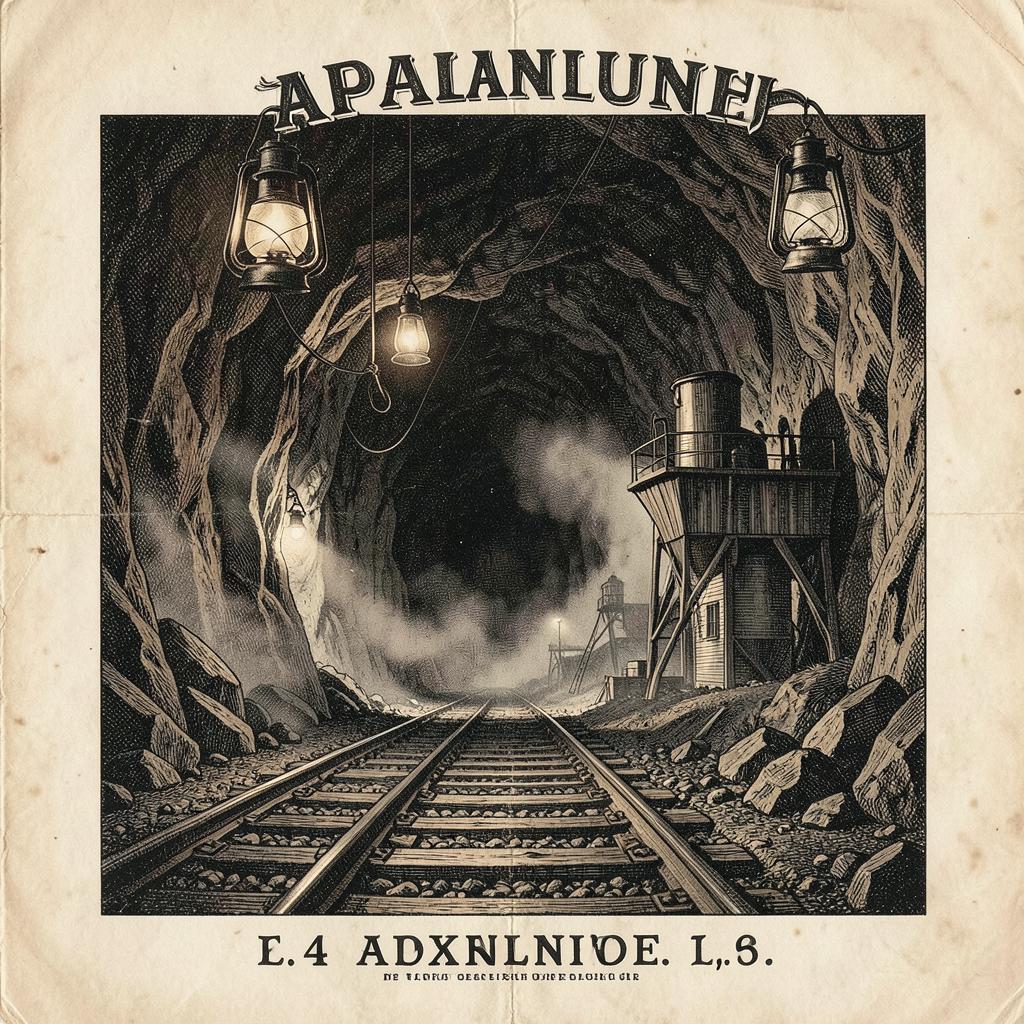
I went into Briar Hollow No. 4 in 1994. The mine closed in 1961 and the portal was sealed with a concrete plug in 1974, but there is a second opening — an air shaft with a steel cap that a man with a battery drill and a bad idea can get through, and I was twenty-six and I had a bad idea.
I will not tell you where it is. I went in with a friend who had done a season of mine survey work and had the sense to bring a gas meter, and we were underground for four hours and got perhaps eleven hundred feet, and I am going to tell you three things and then I am done with the subject.
The first is that the third timber inside the old drift mouth is still there and there is a hollow in the top of it worn by ninety years of small offerings, and there is nothing supernatural about a worn timber, and I sat down next to it for longer than I meant to.
The second is that it is not quiet in there. A sealed mine is the loudest silent place I have ever been in. Water moves. Steel contracts. Somewhere well beyond where we were willing to walk, something the size of a wardrobe came off a roof while we were standing still, and the sound arrived through the rock about a second before it arrived through the air, so that we felt it in the soles of our boots and then heard it, which is an order of events I have never gotten used to.
The third is the reason I have not gone back and will not.
At about the eleven-hundred-foot mark, in a crosscut we had no business being in, my friend's meter went off — oxygen, not gas, which is the one that kills you politely and without any drama at all — and we turned around, and as we turned, something knocked three times on the rib about eight feet ahead of us, at the height of a man's shoulder, and stopped.
Rock does that. Rock does exactly that. I have had the mechanism explained to me by a geologist with great patience and I understood every word of it and I believe all of it.
And I also know, in the way you know things in your body rather than your head, that we had already turned around before it knocked, and that it knocked ahead of us in the direction we were going, and that we walked out under that spot and nothing came down, and that we were out through the shaft cap fifty minutes later in the middle of a green Appalachian afternoon with birds going in the laurel.
There is a thing the Cornish said about the knockers that I did not understand until I was standing in the crosscut, and I offer it as the closest I can come to a conclusion.
They said that the knockers do not warn you because they like you. They said the knockers are working, and have always been working, and that the knocking is simply the sound of somebody else's shift going on the other side of the wall — and that a man who stops when he hears it is not being saved, he is being told, by a neighbor, that there is not enough room in that particular place for the both of them.
My grandfather put it in fewer words on a porch that faced a tipple that is not there anymore. A knock is not a threat, he said. A knock is somebody on the other side of a wall telling you where the wall is.
He left a corner of his supper on the railing every night until he died, and my grandmother swept it off every morning for twenty-two years without one word of complaint, which is, I have come to think, the most Appalachian sentence in this entire account.
"A knock is not a threat. A knock is somebody on the other side of a wall telling you where the wall is."