The Hitchhiker of Route 9
1 min read · Original fiction — a story, not a true account
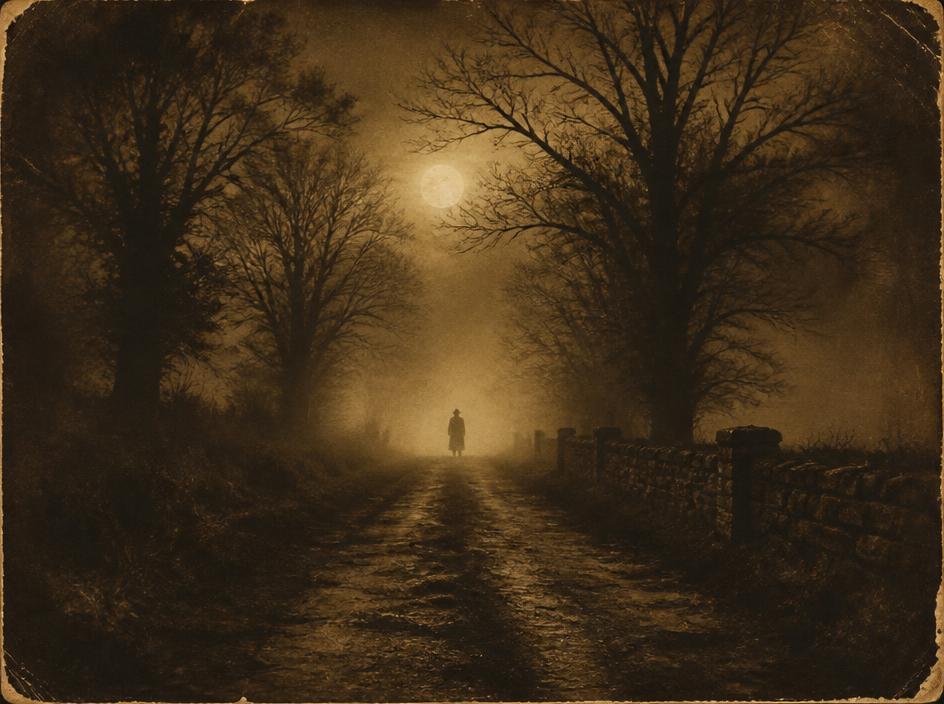
Route 9 runs through the valley like a scar, narrow and unlit, lined with oak trees that lean over the pavement as if listening. Truckers avoid it after dark. Locals take the long way home. Everyone knows the story, and everyone claims to know someone who has seen her.
She appears near the mile marker that reads 9.9, standing at the edge of the road in a pale dress, her thumb out, her face turned away from the headlights. Those who stop describe a young woman with wet hair and mud on her shoes. She gives an address — always the same one, the old cemetery at the end of the valley road — and she does not speak again for the rest of the ride.
The silence is the worst part, drivers say. She sits with her hands folded in her lap, staring straight ahead, and the temperature in the cab drops until their breath fogs. Some try to make conversation. She answers in single words, if at all. When they reach the cemetery gates, she steps out, closes the door, and vanishes into the dark.
In the morning, the passenger seat is soaked through with river water and leaves. Sometimes there is a single silver coin on the dash, left as payment. More often, there is nothing at all — only the smell of damp earth and the lingering certainty that something terrible has been postponed, not avoided.
The legend says she drowned in the river in 1954, on her way home from a dance. Her body was never found. She has been looking for a way back ever since. Those who give her a ride are marked, the old folks say. Not cursed, exactly. Just remembered. And being remembered by the dead is not always a kindness.
"The living should not make promises to the dead."

