Origins of Halloween
The Origin of Trick-or-Treating
Knocking on doors in costume for a treat feels thoroughly modern, yet it borrows from centuries of older customs: soul cakes for prayers, rhymes for coins, and masked visitors who expected hospitality. Here is how those threads came together into the American trick-or-treat.
The short answer
Trick-or-treating grew out of older customs such as souling (begging soul cakes in return for prayers for the dead) and guising (going door to door in disguise, performing for food or coins) in Britain and Ireland. Immigrants brought guising to North America, where Halloween pranks were common. The phrase 'trick or treat' appears in North America by the late 1920s, and the custom spread widely after the Second World War.
Key points
- Souling involved poor folk or children asking for soul cakes around All Souls' Day.
- Guising in Scotland and Ireland meant performing in disguise for a reward.
- Early twentieth-century American Halloween was known for pranks, sometimes destructive ones.
- Communities promoted organized treat-giving partly to curb vandalism.
- Sugar rationing paused the custom during the war; it boomed in 1950s suburbs.
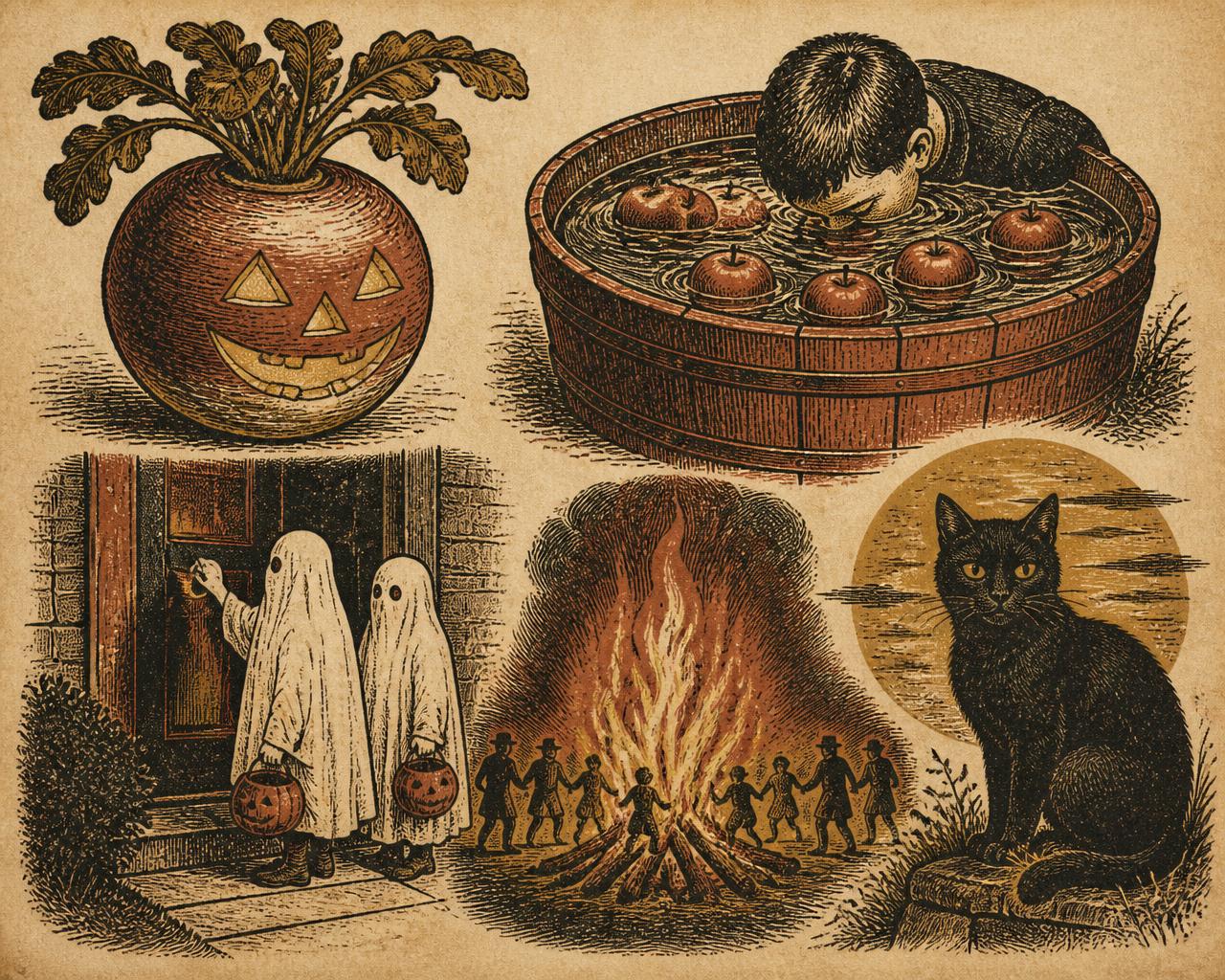
Souling, Guising and Mumming
Several door-to-door customs in Britain and Ireland combined disguise, performance and a gift in return.
The Older Customs
These customs are related ancestors, not one straight line.
Customs to know
- Souling (England)
- Guising (Scotland and Ireland)
- Mumming plays
- Soul cakes and coins
What each involved
Soulers went house to house around All Souls' Day, offering prayers for the dead in exchange for small spiced cakes.
Guisers wore disguises and sang, recited or told jokes before receiving fruit, nuts or coins.
Mummers performed short folk plays in costume at seasonal festivals.
Each custom paired a visitor's performance with a household's hospitality.
Pranks, Parties and the American Trick-or-Treat
In North America, Halloween became a night of mischief before it became a night of candy.
From Mischief to Candy
Treats offered a friendlier bargain than overturned gates and soaped windows.
Turning points
- Early 1900s Halloween pranks
- Community parties of the 1920s–30s
- Wartime sugar rationing
- Post-war suburban neighborhoods
How it changed
Young people played Halloween pranks that grew rowdier in the early twentieth century.
Towns and civic groups organized parties and encouraged households to give treats.
'Trick or treat' is recorded in North America by the late 1920s and spreads through the 1930s.
After rationing ended, magazines, radio and television helped make door-to-door candy a national habit in the 1950s.
Frequently Asked Questions
- Where did trick-or-treating come from?
- From older British and Irish customs such as souling and guising, adapted in North America and shaped by the custom of Halloween pranks. The modern form was established by the 1950s.
- What is a soul cake?
- A small spiced cake or bun given to soulers around All Souls' Day, traditionally in return for prayers for the dead.
- When did people first say 'trick or treat'?
- The phrase appears in North American newspapers by the late 1920s and became common during the 1930s and after the Second World War.