The Dead Letter at Saint Orla’s
5 min read · Original fiction — a story, not a true account
By Haunts Halloween Editors · Reviewed October 27, 2026
There is a room below the Marrowby sorting office where letters go when neither the living nor the dead will claim them. The post office calls it the Repository of Surcharged and Irregular Mail; the clerks call it the Well.
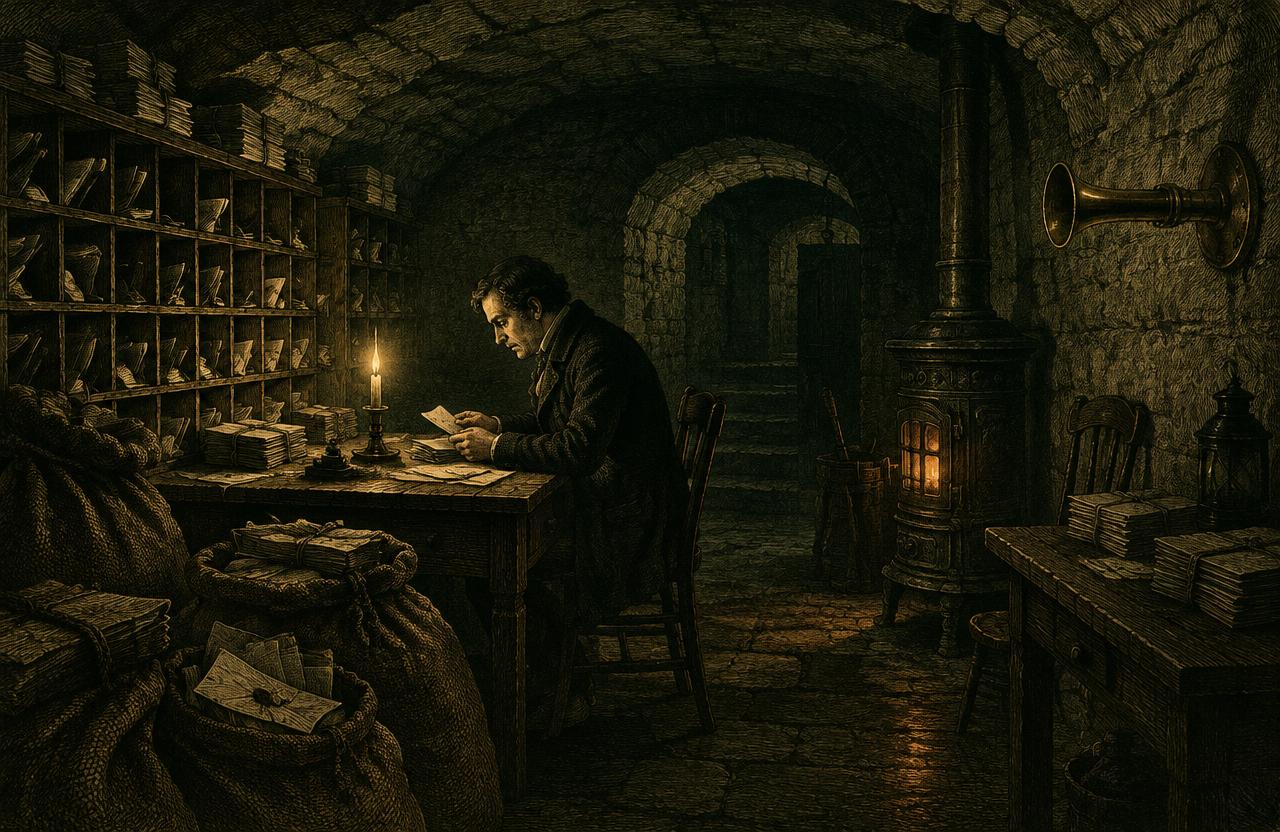
It smells of cold tallow, sizing glue, and damp lime. By regulation, every item held in the Well must be unsealed by a sworn clerk, inspected for currency or bank scrip, recorded in the leather ledger, and burned in the cellar stove on the first Tuesday of November. For thirty years, that stove was my responsibility.
In October of 1899, three sacks arrived from the shuttered station at Hollowmere. They were tied with tarred hemp that had rotted into the burlap, and when I slit the knots, an odour came out that was not paper: it was the sour, mineral chill of river mud dried in the dark.
Most were invoices for timber never shipped and railway tickets dated the week of the reservoir damming. But near the bottom of the second sack lay a parcel wrapped in heavy linen drafting paper, tied with green silk ribbon, and sealed with black wax that bore no crest—only the clean, oval impression of a human thumb.
The hand was feminine, spidery, and written with iron-gall ink that had eaten tiny pinholes through the paper:
To Sister Ada Bell Ward Four, Lower Corridor Saint Orla’s Hospital for the Distempered To be held until the water clears.
I set it beside the stove. I had lived in the valley long enough to know that Saint Orla’s was evacuated in the winter of 1891, when the south dyke buckled and the Blackwater backed into the boiler rooms. By 1897, the lower wards were five feet under black marsh water. There was no Sister Ada Bell on the county pension list; there was no Ward Four that was not green with pondweed and home to pike.
The rule book states: When the address is fanciful, mythical, or impossible of delivery, the clerk shall sever the wrapping with the brass knife and note the contents.
I slid the knife under the green silk. Inside was no letter.
There was a key—heavy, cut from soft brass that had darkened to bronze, with four square teeth and a tag of parchment wired to the bow. On the tag was written in the same corrosive ink: The lock on the linen press. She left the ledger inside before the water reached her knees.
Behind the key lay a photograph: a wet-plate albumen print on blackened tin. It had been taken under gaslight in a tiled room. In the foreground stood a brass bedstead, its mattress stripped to the ticking. Beside it stood a woman in the dark grey habit of Saint Orla’s nursing staff, her hands folded over a white linen bib.
Her face was not blurred—the exposure was sharp enough to count the tortoiseshell buttons on her cuffs—but her eyes were closed. Beneath her feet, the checkerboard tiles were submerged under two inches of black, reflective water that showed no ceiling, only the faint reflection of a second woman standing behind the camera, holding an unlit lantern.
I laid the photograph on the table. My fingers smelled of sulfur and pond water.
That night, the sorting office closed at eight. The gas was turned off at the main cock by the street door, as was required. I remained in the cellar by the light of a single tallow candle, entering the numbers of the Hollowmere parcel tags into the ledger.
At twenty minutes past nine, the speaking tube on the north wall whistled.
The speaking tube runs from the sorting cellar to the parcel window on the street. It is forty feet of brass piping, dry and empty. The window above had been shuttered and padlocked since sunset.
I did not answer. A clerk of twenty years does not answer speaking tubes that whistle after the gas is out.
It whistled again—a short, breathless pulse that ended in a wet rattle, like water drawn through teeth. Then, distinct and hollow in the horn of the tube, came a voice:
"Is the parcel for Sister Ada stamped?"
My hand stopped over the ledger. The ink on the nib dried into a black crust.
"The parcel cannot be delivered," I said to the empty room. "The institution is discontinued."
A silence followed so dense that I could hear the tallow guttering in the draft beneath the coal chute. Then the brass tube rattled, vibrating against its masonry brackets as though a hand had closed around the pipe three floors above.
"It is not discontinued," the voice whispered. The tone was not angry; it had the terrible, level patience of running water. "The beds are still made. The night rounds are still kept. Bring the key to the parcel window, or she will come down the wire to fetch it."
The candle went out. Not by wind: the wick gave off a sharp hiss, as if pinched between wet fingers.
In the dark, the smell of river water filled the cellar until my eyes watered. On the table, the brass key began to tap against the oak board—a slow, regular cadence of four beats, a pause, then four beats more.
I did not run. If you run in a sorting cellar in the dark, you break your shins against the iron parcel trucks and die on the flagstones. I reached out with both hands, found the parcel wrapping, the photograph, and the heavy key, and pressed them into the iron belly of the stove.
My match took on the third scrape. The green ribbon curled and blackened. The linen paper flared bright yellow.
Only the tin plate refused to burn. As the heat took the varnish, the dark pool of water on the tiles blistered and boiled away—and for one second, before the metal warped into soot, the woman in the habit opened her eyes.
The stove door clanged shut. The room was empty.
The next morning, I entered item 4,112 in the journal: Linen parcel; contents decomposed by damp; destroyed by order.
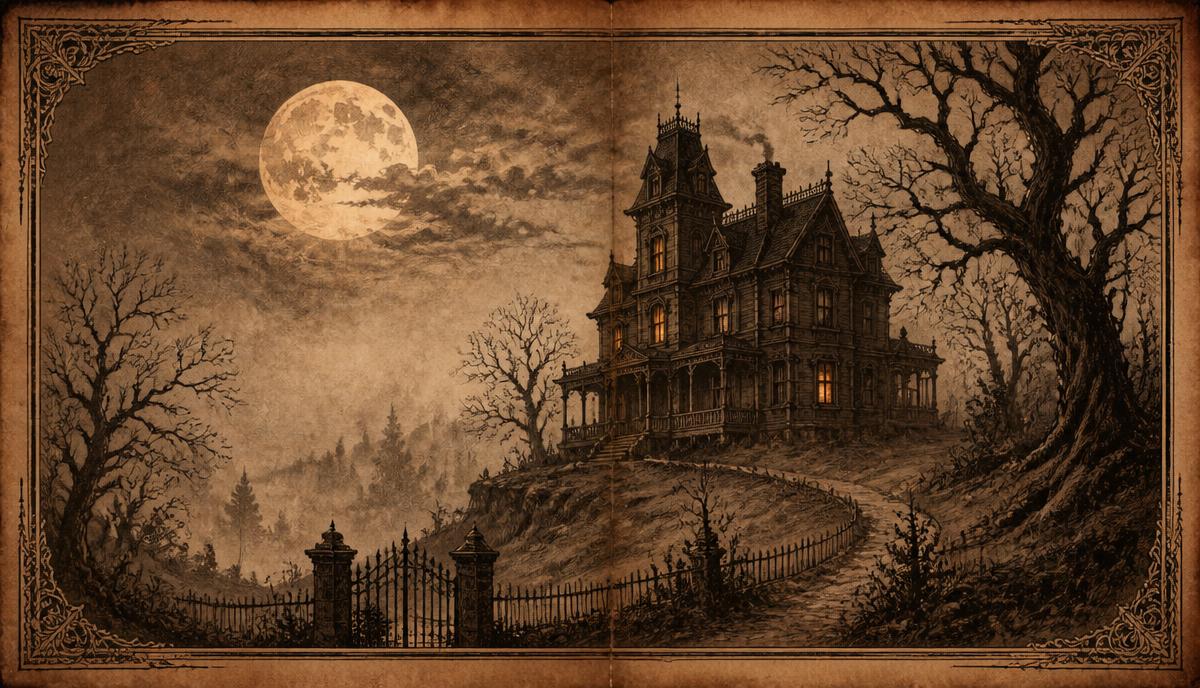
Saint Orla’s still stands six miles down the valley road. The roof has fallen through the chapel, and the lower floors are drowned beneath eight feet of black silt where the reservoir backs up behind the weir. But if you take a boat among the willows on a clear October dusk, when the water is low, you will see the white tiled walls of Ward Four through the weeds—and on the third window sill, dry above the high-water line, sits an unlit iron lantern and a clean linen bib, waiting for the mail.
"It is not discontinued. The beds are still made. The night rounds are still kept."